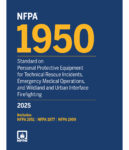
Learn how NFPA 1977 and NFPA 1975 apply to protective garments. Understand testing, garment design, and proper use.
NFPA standards define how protective garments are tested, but certification applies to the finished garment, not just the fabric. Understanding how garments are designed and evaluated under NFPA 1977 and NFPA 1975 helps departments and professionals select appropriate apparel for station duties, training, and wildland operations—ensuring garments are used within their intended protective scope.
NFPA 1977: How Wildland Firefighting Garments Are Evaluated
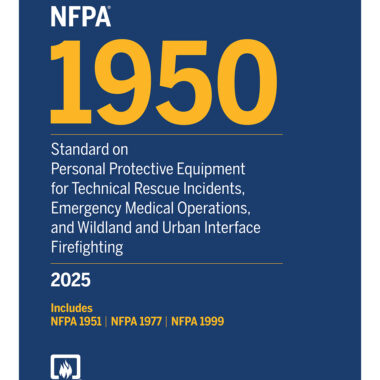
Garments certified to NFPA 1977 are engineered for wildland firefighting environments where exposure to radiant heat, flame, and rugged terrain is expected. Certification confirms that the completed garment meets performance requirements across material selection, construction, and durability.
Fabric Selection and Flame Resistance
Wildland garments use flame-resistant materials designed to limit ignition and self-extinguish when exposed to flame. These materials are selected to maintain integrity under heat exposure without melting or dripping, supporting safer performance during wildfire operations.
→ Wildland Firefighting Clothing (NFPA 1977 Certified)
Garment Construction and Seam Integrity
NFPA 1977 evaluates seam strength, tear resistance, and tensile strength to ensure garments remain intact during demanding physical activity. Reinforced stitching and strategic panel design contribute to durability in brush, uneven terrain, and extended wear conditions.
Heat Exposure and Dimensional Stability
Garments are exposed to elevated temperatures to verify shrinkage control. Maintaining proper fit and coverage after heat exposure is critical to mobility and protection during active fire operations.
Durability Over the Garment’s Service Life
Laundering and heat-aging tests confirm that flame resistance and structural performance persist after repeated cleaning cycles, ensuring garments remain compliant throughout their intended lifespan.
NFPA 1975: How Station and Work Uniform Garments Are Evaluated
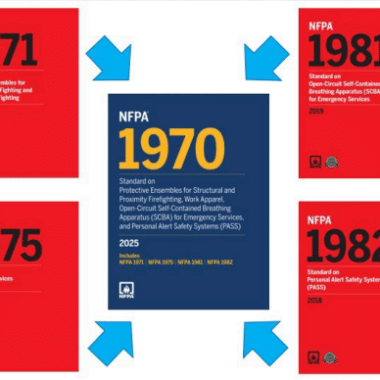
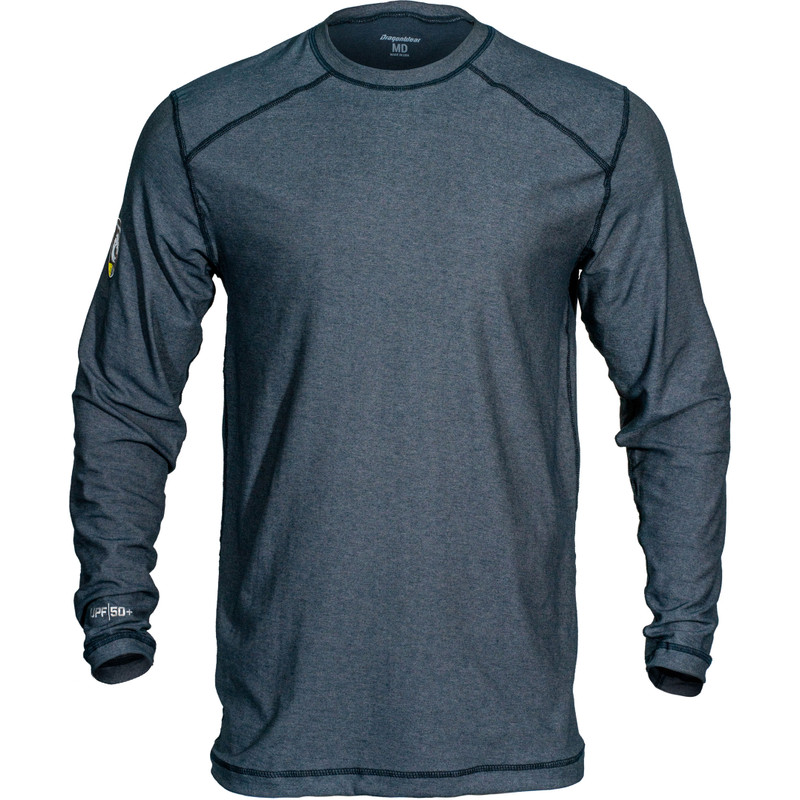
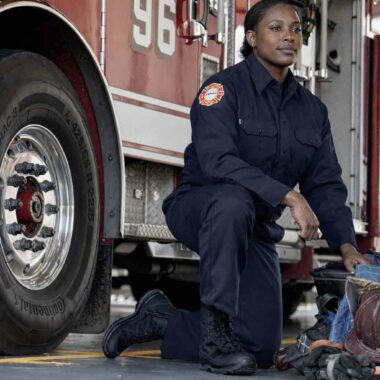
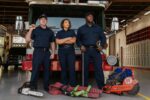
Garments certified to NFPA 1975 are designed for station wear, training, and daily operational duties where direct firefighting is not expected, but incidental heat or flame exposure may occur.
Ignition Resistance and Thermal Behavior
NFPA 1975 garments are evaluated to ensure fabrics do not readily ignite, melt, drip, or adhere to the skin when exposed to heat. This reduces the risk of secondary burn injury during unexpected exposure scenarios.
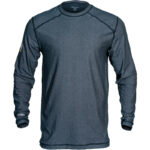
→ FR Stationwear (NFPA 1975 Certified)
Fabric Composition and Performance Stability
Materials are verified to ensure flame-resistant properties—whether inherent or treated—remain effective after repeated laundering. This helps ensure consistent safety performance throughout routine use.
Garment-Level Heat Response
Testing applies to the completed uniform, including trims, thread, and construction methods. All components must behave predictably under heat exposure to support overall garment safety.
Longevity and Care Considerations
Laundering durability tests confirm that shrinkage control and ignition resistance are maintained over time, aligning garment performance with real-world stationwear use cycles.
Why NFPA Certification Applies to the Finished Garment
NFPA standards are enforced at the garment level, not the fabric level alone. Construction quality, component compatibility, and long-term durability all influence how protective apparel performs. Certified garments provide verified performance when used as intended within station or wildland operations.