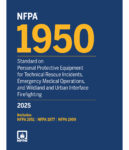
NFPA 1977 → NFPA 1950
What Changed, Why It Matters, and What It Means for Stationwear & Technical Rescue Apparel
The release of NFPA 1950 marked a major evolution in how technical rescue and non-fire emergency response apparel is evaluated, specified, and procured. For years, NFPA 1977 served as the primary standard governing technical rescue ensembles and station/work apparel for non-fire environments. NFPA 1950 replaces and expands upon that framework, reflecting how modern rescue operations—and the clothing worn during them—have fundamentally changed.
Below is a practical breakdown of the key changes, what stayed the same, and why this matters for departments choosing stationwear and technical rescue gear today.
Why NFPA Retired 1977
NFPA 1977 was written at a time when technical rescue apparel was relatively narrow in scope—focused primarily on durability, abrasion resistance, and basic garment construction. Over time, rescue operations became more complex:
- Urban Search & Rescue (USAR)
- Rope and confined-space rescue
- Vehicle extrication
- Disaster response and recovery
- EMS crossover operations
NFPA responded by consolidating multiple related standards into a single, modernized framework that better reflects how gear is actually used in the field.
That framework is NFPA 1950.
Key Changes from NFPA 1977 to NFPA 1950
1. A Broader, More Integrated Standard
NFPA 1950 is not just a replacement—it’s an expansion.
While NFPA 1977 focused mainly on technical rescue protective clothing, NFPA 1950 integrates multiple protective ensemble categories under one umbrella. This allows for clearer differentiation between:
- Technical rescue apparel
- Station/work uniforms
- Footwear, helmets, and gloves used in non-fire operations
This alignment helps departments build complete, system-based PPE programs rather than treating garments as standalone items.
2. Clearer Distinction Between Fire and Non-Fire Use
One of the most important clarifications in NFPA 1950 is what it does not cover.
Just like NFPA 1977, NFPA 1950 does not provide flame or thermal protection suitable for interior structural firefighting. However, NFPA 1950 reinforces this boundary more explicitly to reduce misuse in the field.
What this means:
- NFPA 1950 apparel is intended for non-IDLH, non-fire rescue environments
- It is not a substitute for turnout gear or fire-exposed PPE
- It supports departments that want lighter, more mobile gear without implying fire resistance
This clarity helps reduce risk caused by wearing the wrong garment in the wrong environment.
3. Updated Performance and Durability Expectations
NFPA 1950 modernizes how garments are evaluated for real-world rescue work, including:
- Abrasion resistance
- Tear strength
- Seam integrity
- Ergonomic durability under repeated movement
While NFPA 1977 focused heavily on basic fabric performance, NFPA 1950 places more emphasis on how garments perform as worn systems, including reinforcement zones, articulation, and construction quality.
For stationwear and rescue uniforms, this translates to:
- Better longevity
- Improved mobility
- More consistent performance across manufacturers
4. Stronger Alignment with Modern Workwear and Footwear
NFPA 1950 better reflects how technical rescue apparel overlaps with modern stationwear and duty uniforms. This includes clearer guidance around:
- Pants and shirts worn during rescue operations
- Footwear designed for traction, puncture resistance, and support
- Compatibility with other PPE elements
This is especially relevant for departments that want one garment platform to support training, station duties, and technical response without constantly changing uniforms.
5. Improved Clarity for Procurement & Policy
One of the quiet but meaningful improvements in NFPA 1950 is how it supports policy writing and purchasing decisions.
Compared to NFPA 1977, the newer standard:
- Reduces gray areas around “approved” vs “non-approved” garments
- Makes it easier to justify non-FR stationwear where fire exposure is not expected
- Helps departments document due diligence in PPE selection
This is critical for chiefs, safety officers, and procurement teams balancing safety, comfort, and budget.
What Did Not Change
Despite the update, several core principles remain consistent from NFPA 1977 to NFPA 1950:
- These garments are not fire protective
- Materials must be thermally stable (no melting or dripping)
- Mobility, durability, and comfort remain primary design goals
- Apparel is intended for technical rescue and support roles, not suppression
NFPA 1950 builds on these foundations rather than abandoning them.
What This Means for Stationwear.ca
At Stationwear.ca, we align our technical rescue and station apparel offerings with the intent of NFPA 1950—not just the label.
That means:
- Durable, non-melting fabrics suitable for layered PPE systems
- Garments designed for movement, long shifts, and real-world wear
- Clear education on when FR is required—and when it isn’t
- Support for departments transitioning from legacy NFPA 1977 language to NFPA 1950-based policies
NFPA 1950 isn’t about adding unnecessary protection—it’s about choosing the right protection for the job.